


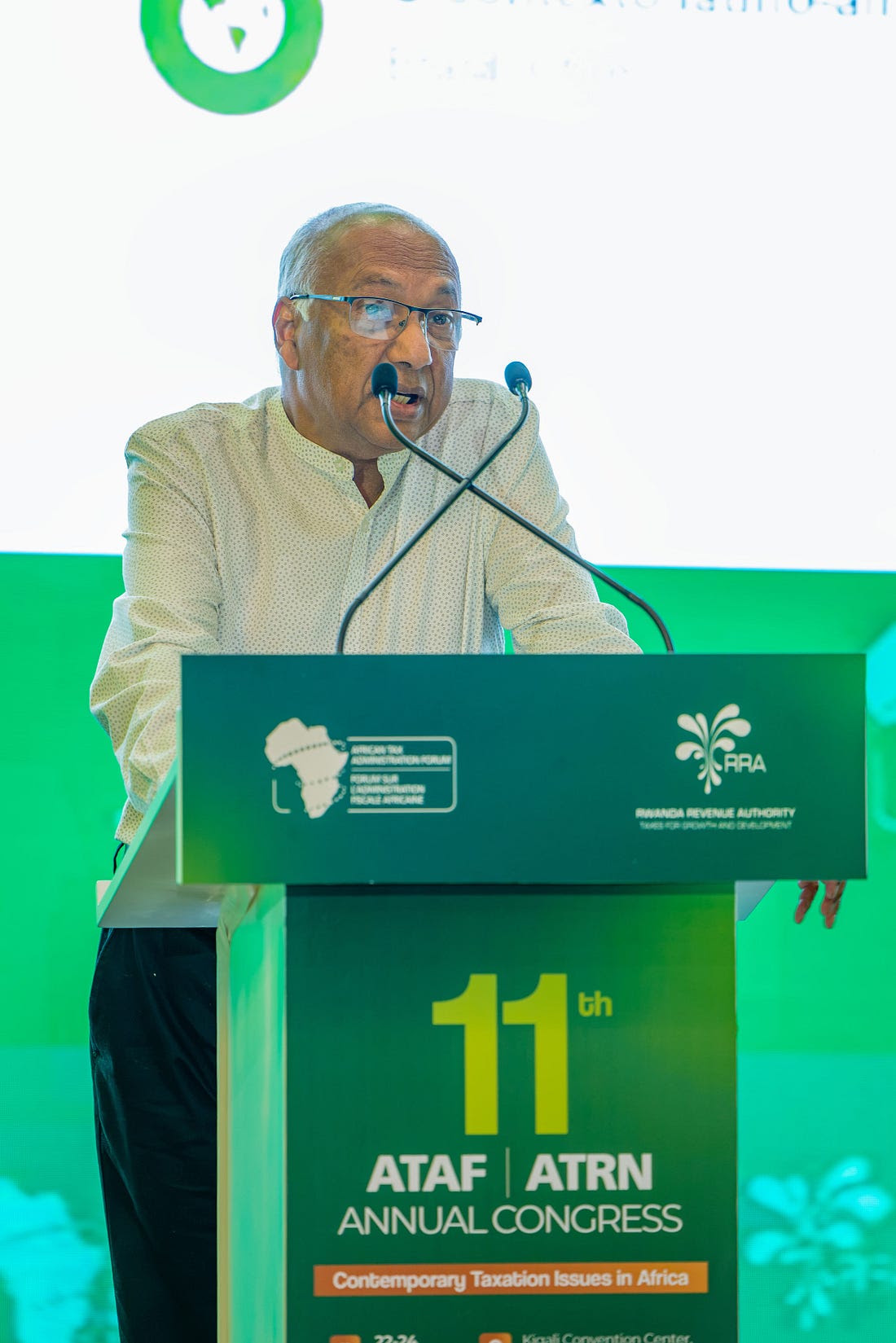
Professor of Economics and Public Finance at the Wits School of Governance, Pundy Pillay, has urged African countries to strengthen home-grown tax research and policy capacity to address the continent’s fiscal challenges and reduce reliance on external expertise.
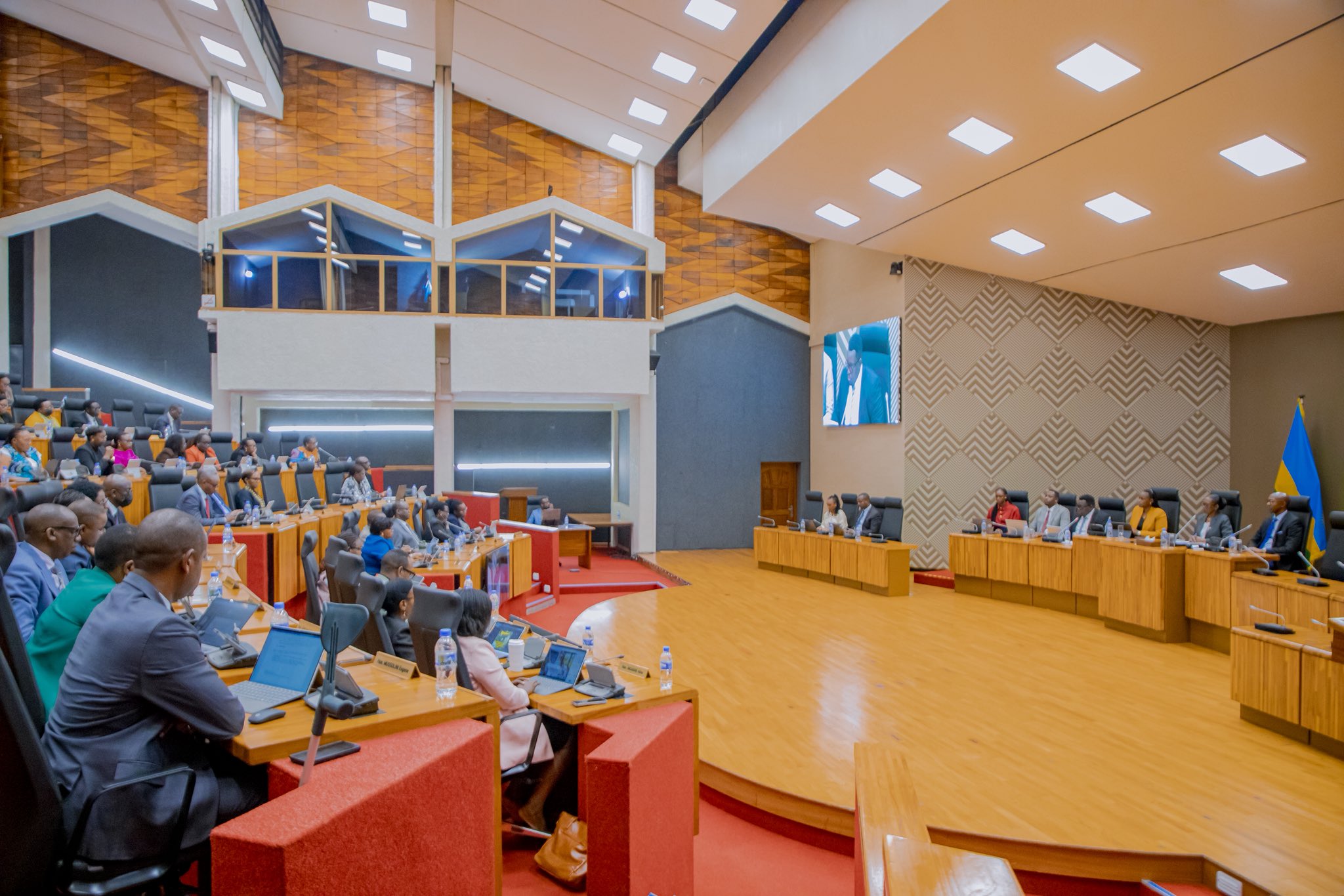
Pillay made the call Thursday during the 11th ATAF/ATRN Annual Congress at the Kigali Convention Centre in Kigali, Rwanda, during a forward-looking session on “Setting the African Tax Research Agenda: Priorities for Africa Post FfD4.”
He said African countries already possess substantial technical expertise and experience that can be used to shape tax systems around the continent’s own economic, social and development priorities.
“We have the expertise and experience on the continent,” Pillay said.
His intervention came as African governments seek to strengthen domestic resource mobilization, reduce dependence on external financing and play a greater role in shaping international tax rules.
Africa must set its own research priorities
Pillay challenged African universities, policymakers, tax administrations and research institutions to move beyond a research agenda largely shaped by external institutions, methodologies and funding priorities.
He said African tax research should increasingly respond to the continent’s own fiscal challenges and generate evidence that policymakers can use to design and implement reforms.
“We don’t have to leave the field to tell us how to develop the tax system,” he said.
The session identified several areas requiring greater African research, including taxation of the informal economy, tax expenditures, wealth taxation, gender-responsive taxation, climate taxation, artificial intelligence in tax administration, tax morale and trust, tax microdata and the implications of the UN Tax Convention.
Pillay said African institutions need to develop the capacity to research these issues using African data and African policy priorities.
Wealth taxation needs greater research
Pillay highlighted wealth taxation as one area where political considerations can affect tax policy.
He argued that governments sometimes resist wealth taxes because of political and social interests rather than evidence about their potential fiscal and distributional effects.
“Governments don’t want to impose wealth taxes because it infringes upon membership of the same group as the politicians,” he said.
His remarks underscored the importance of political-economy research in understanding why technically sound tax reforms can struggle to gain political support.
The issue is particularly relevant as African countries search for additional domestic revenue sources while facing growing demands for public investment and social spending.
Declining donor funding
Pillay also challenged African institutions to rethink their response to declining external funding for research.
Rather than viewing reduced donor support solely as a setback, he said it could create an opportunity for African governments, universities and civil society organizations to take greater responsibility for financing research on the continent.
“I personally don’t see declining donor funding as a bad thing because now it forces us to take the lead,” Pillay said.
He called for stronger domestic investment in tax research and for governments, universities and non-governmental organizations to work together to create sustainable financing mechanisms.
Such funding, he said, would enable African researchers to produce evidence grounded in the continent’s own tax systems, administrative realities and development priorities.
Intra-African expertise
Pillay said African countries with stronger institutional and research capacity should increasingly provide technical assistance to countries with fewer resources.
He pointed to countries including South Africa, Botswana, Morocco and Egypt as potential sources of expertise and skills that could be shared with lower-income African countries.
“We don’t need to go to Washington,” he said, calling for African countries to strengthen their own capacity to collect, process and analyze tax data.
The approach would also encourage regional cooperation and reduce duplication by allowing countries to share knowledge, research infrastructure and technical skills.
Stronger Links Between Universities and Tax Authorities
Pillay also emphasized the need for closer collaboration between universities and revenue authorities.
The congress research agenda identifies access to tax microdata, including administrative records, taxpayer surveys and open data, as a major priority.
Stronger partnerships could allow researchers to study real tax administration challenges while helping revenue authorities benefit from independent academic analysis.
Pillay’s intervention also points to the importance of long-term research programmes rather than one-off studies, particularly for complex issues requiring consistent data collection and analysis.
Private sector and Tax compliance
Pillay called for governments to rethink how they engage the private sector on taxation.
He argued that businesses need greater understanding of the long-term role of taxation in financing development and supporting the functioning of the state.
The issue forms part of a wider research agenda around tax morale, trust and the social contract between taxpayers and governments.
Understanding why taxpayers comply with tax obligations — and what governments can do to strengthen voluntary compliance — could help African countries improve domestic revenue mobilization without relying exclusively on enforcement.
A stronger African tax research network
Pillay also challenged the African Tax Research Network to strengthen its role as a regional platform connecting African researchers, tax administrators, policymakers and civil society.
“It needs to become a truly African institution,” he said.
He called for greater regional skills-sharing and resource pooling to strengthen Africa’s capacity to generate and use tax research.
The challenge is particularly important as African countries seek greater influence in global tax governance and work to develop domestic revenue systems capable of supporting development.
Building fiscal self-reliance
Pillay’s presentation placed research capacity at the centre of Africa’s broader domestic resource mobilization agenda.
African governments face pressure to finance infrastructure, public services and climate-related investments while managing debt and uncertain external financing.
That environment increases the importance of evidence-based tax policy and research capable of identifying sustainable and equitable sources of domestic revenue.
Pillay argued that African scholars and institutions should therefore move from reacting to research priorities defined elsewhere to setting their own agenda.
That means investing in African universities, strengthening links with revenue authorities, improving access to tax data and creating sustainable funding for long-term research.
The agenda extends from wealth and informal-sector taxation to climate taxes, tax expenditures, artificial intelligence, gender and the UN Tax Convention.
For Pillay, the broader objective is to ensure that Africa develops the knowledge, institutions and technical capacity needed to shape its own tax future.
As African countries pursue greater fiscal self-reliance, building that research ecosystem could help ensure that tax policy is increasingly informed by evidence generated within Africa and focused on the continent’s own development priorities.