


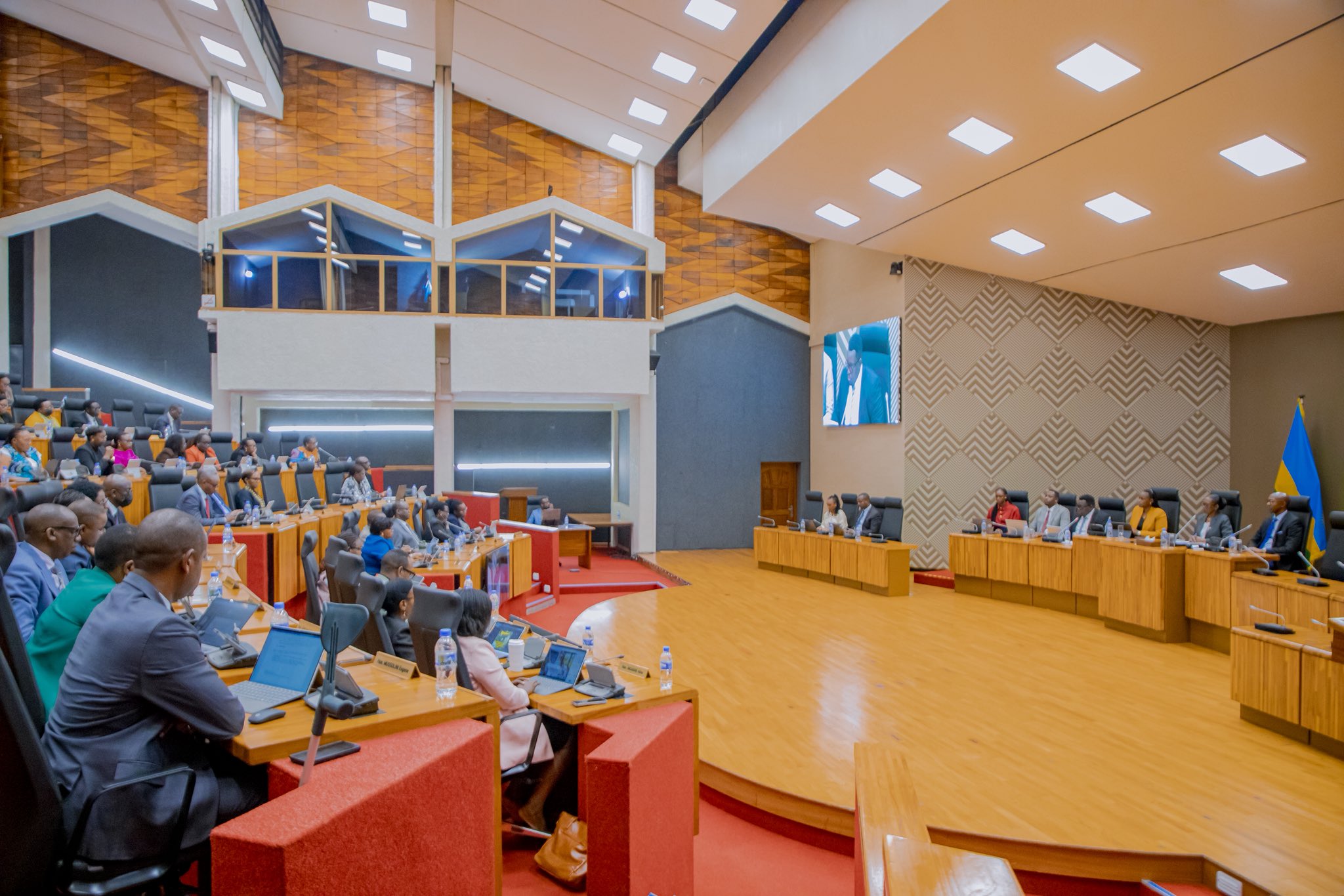
Rwanda’s lower house of Parliament has approved more than $430 million in loan agreements to expand energy access, support job creation and finance key infrastructure projects, officials said.
Lawmakers voted overwhelmingly on April 13 after a presentation by State Minister for Finance in charge of the Treasury, Godfrey Kabera.
A major share of the financing will go toward improving electricity access and promoting clean cooking solutions, particularly in rural areas. The plan includes connecting 200,000 households to electricity and providing clean cooking equipment to 100,000 more.
The energy initiative will be partly funded by a 14.8 billion Japanese yen (about $90 million) loan from the Asian Infrastructure Investment Bank. The project aims to close remaining gaps in electricity coverage despite significant gains over the past decade.
Kabera told lawmakers that challenges persist, including limited financing, long distances between power infrastructure and users, and continued reliance on traditional cooking methods.
The program will be implemented in phases, including upgrading and expanding electricity networks, increasing on-grid and off-grid connections, and distributing clean cooking technologies.
In addition to households, the plan will supply electricity to 850 businesses and industries and 310 schools and health centers. About 50,000 users are expected to be connected through off-grid systems, mainly solar power.
The government also plans to install street lighting along 200 kilometers (124 miles) of roads in satellite towns around the capital, Kigali.
According to the Rwanda Energy Group, electricity access reached 85.4% in 2025, including 60.1% of households connected to the national grid and 25.3% using off-grid solutions. Lawmakers questioned whether the new investment would help the country surpass its target of 90% access this fiscal year.
Kabera said the financing aligns with national development priorities and will help sustain progress.
The broader package includes more than 213 million euros in financing from Standard Chartered Bank and Société Générale, backed by the International Development Association, part of the World Bank Group. The loan will be repaid over 15 years with a six-year grace period.
Another loan worth 15.3 billion yen from the International Development Association will support policies aimed at promoting inclusive and sustainable employment. It will be repaid over 31 years with an eight-year grace period.
Kabera said the funds will also support digital connectivity, strengthen cooperation between the public and private sectors, and modernize agriculture and livestock production through technology.
The Asian Infrastructure Investment Bank loan will be repaid over 29 years, including a five-year grace period.

Youre so cool! I dont suppose Ive read anything like this before. So nice to find someone with some authentic ideas on this subject. realy thanks for beginning this up. this website is one thing that is wanted on the web, somebody with a little originality. helpful job for bringing one thing new to the internet!