


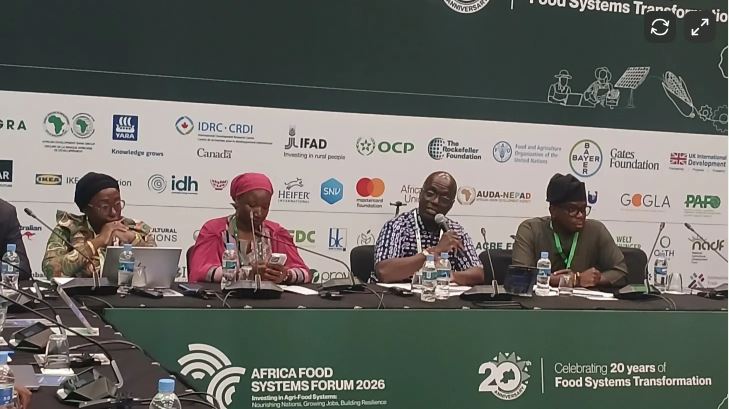
African civil society organisations are pushing for a shift from aid dependence toward commercial agriculture, calling for smallholder farmers, women and youth businesses to be treated as viable investments in the continent’s food systems.
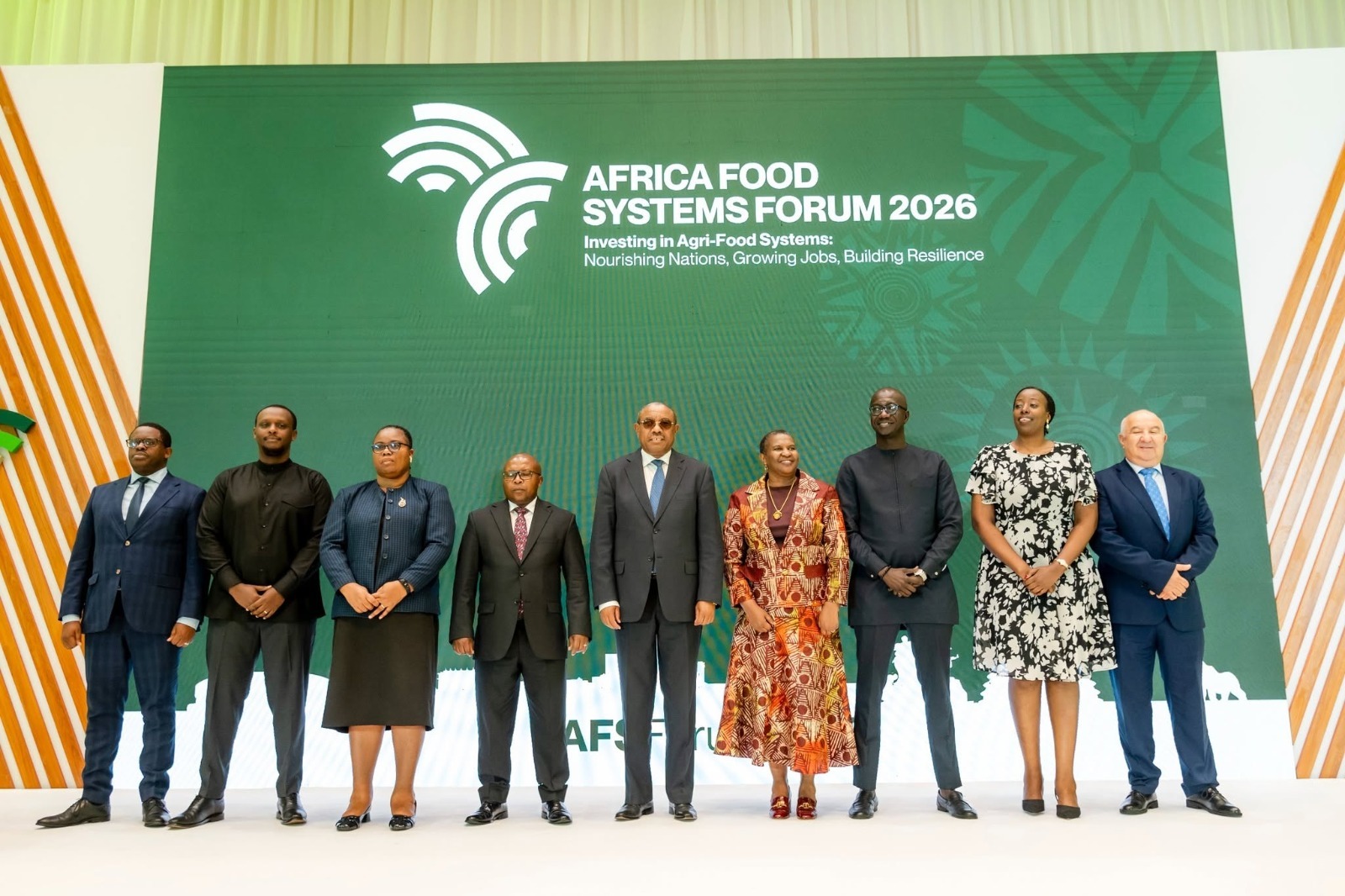
The call was made on the sidelines of the 2026 Africa Food Systems Forum in Kigali, where African CSOs discussed how communities can play a bigger role in attracting investment, strengthening accountability and turning local agricultural networks into organized investment opportunities.
The CSOs said the decline in international development financing is creating a major challenge for agricultural transformation in Africa.
They called for financial systems to be redesigned to make it easier for smallholder farmers and youth-led agricultural businesses to access investment.
The session, titled “Championing Grassroots Leadership to Unlock Investment,” focused on moving away from dependence on foreign aid and finding new ways to finance agriculture through domestic, private, philanthropic and community-based investment.
Chikondi Chabvuta-Mkawa, African Union Commission engagement lead with CARE International and chairperson of the Comprehensive Africa Agriculture Development Programme Non-State Actor platform, said communities should be treated as partners in developing food systems rather than simply as recipients of aid.
“The world is moving towards more business, so we are bridging the gap between emerging impact investors and rural realities,” she said.
She said CSOs were working to connect public, private, philanthropic and domestic financing with community-led efforts on climate resilience, food security and job creation.
Chabvuta-Mkawa said this has positioned CSOs as important partners in implementing the CAADP Kampala Implementation Guidelines for 2026-2035, national agriculture investment plans and food systems programmes.
She said Africa must move beyond viewing agriculture only as a social sector and focus more on its economic potential.
“In the next five years, the targets set in the CAADP Kampala to transform Africa’s agri-food systems into resilient, sustainable and inclusive engines of growth will be achieved,” she said.
“Production will increase with postharvest losses reduced. We will go beyond the social aspect of agriculture by embracing the economic side, encompassing markets, nutrition, the environment and resilience,” she said.
She said stronger agricultural trade would also help African countries compete in international markets.
Constance Okeke, an ActionAid International project manager, said CSOs have a key role in making sure continental commitments translate into results in local communities.
“Inclusive investment is not only about mobilising more money. It is about designing investment so that it reaches smallholders, youth enterprises, women-led businesses, informal food actors and local communities through fair, transparent and climate-resilient delivery systems,” Okeke said.
Elizabeth Namaona, director of the Malawi Civil Society Agriculture Network, said CSOs must also be accountable for the resources entrusted to them.
“We should demand high quality and impact of our interventions in the communities we serve,” Namaona said.
“We should be true to ourselves on transparency, evidence-based programming, innovation and financial sustainability to be credible and relevant as we demand the same from our governments,” she said.
The CSOs’ position is in line with calls by the African Union for governments to increase investment in agriculture, with a focus on smallholder farmers, women, youth, informal markets, decent jobs, nutrition and climate resilience.
Speaking at the forum’s opening ceremony, Vilakati said Africa already has policies capable of addressing many of its food production challenges but lacks enough action and investment.
“We know how to address these challenges. What is needed is the political will of governments to collaborate, invest and be accountable to strengthen agri-food systems and climate adaptation, and to create jobs,” Vilakati said.
“We love to make policies, but our people need action and investments. The political will will help Africa to move from being a food importer to a processor and exporter of agricultural products,” he said.
The Africa Food Systems Forum was held under the theme “Investing in Agri-Food Systems: Nourishing Nations, Growing Jobs and Building Resilience.” It ran from Aug. 31 to Sept. 4, 2026.