


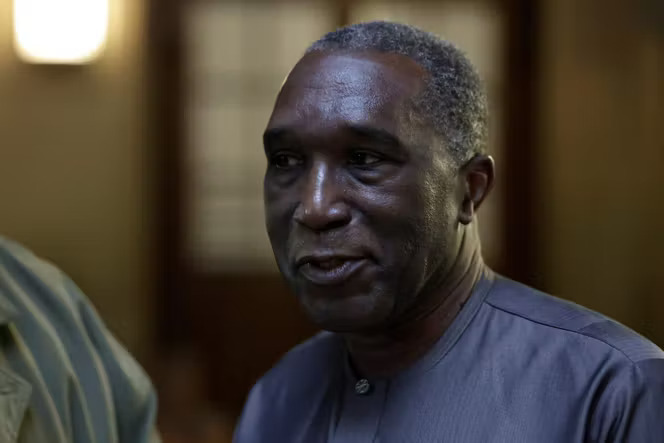
Eugène Rwamucyo, a Rwandan former doctor standing trial on appeal in France over alleged involvement in the 1994 Genocide against the Tutsi, on Tuesday maintained his innocence, rejected prosecution evidence and said his actions during the genocide had been driven by fear rather than criminal intent.
Speaking during the twenty-first hearing before the Paris Assize Court, Rwamucyo addressed the court for nearly two hours before questioning began, arguing that the proceedings had been unbalanced and insisting that he had been wrongly accused.
“I appealed because I am innocent,” he told the court, after paying tribute to the victims of the Genocide against the Tutsi.
Rwamucyo said the prosecution had relied on significantly more witnesses than the defense, which he argued had affected the presentation of his case. He also challenged the credibility of several prosecution witnesses, saying some accounts contained inconsistencies or were based on information obtained after 1994.
“I am not saying these witnesses are liars, but how can so many witnesses describe things that never happened?” he said.
The former physician also defended a public health report he prepared during the genocide, rejecting the prosecution’s characterization of it as an “inventory of death.”
“Faced with this horror, I did what I could. I prevented a second catastrophe,” he said.
Questioned about alleged ties to the Interahamwe militia, Rwamucyo denied ever being a member or supporter.
“I was not Interahamwe, and I never will be,” he said, adding that he feared the militia and reiterating his long-held claim that some of its leaders had been infiltrated by the Rwanda Patriotic Front (RPF).
The court also questioned Rwamucyo about his political activities before and during the genocide, including his links to organizations such as the former ruling MRND party and the Circle of Republican Academics in Butare.
He denied ever belonging to a political party but acknowledged helping establish the academic group, describing it as a discussion forum created at a time when he believed Rwanda was facing a national crisis.
A central focus of Tuesday’s hearing was a speech Rwamucyo delivered on May 14, 1994, before then-Prime Minister Jean Kambanda. After the court played a recording of the address, judges questioned why he had made no reference to the mass killings of Tutsi civilians.
Rwamucyo said he had spoken while under intense fear.
“I had not fully understood what had happened. I was afraid of the militiamen,” he said.
Asked about his call for civilian self-defense during the speech, he said it reflected an attempt to protect himself rather than support for violence.
“I was wondering how I was going to get out of that trap. In that speech, I was pleading for myself,” he told the court.
The hearing also examined Rwamucyo’s interpretation of events leading up to the genocide. He argued that the April 6, 1994, attack on the plane carrying then-President Juvénal Habyarimana was the decisive trigger.
“If there had been no RPF war, and above all no attack on the plane, there would have been no genocide,” he said.
The presiding judge challenged that assertion, referring to evidence presented during the trial concerning preparations for the massacres, including the rapid establishment of roadblocks and the killings of political leaders. Rwamucyo maintained his position.
Throughout the hearing, Rwamucyo continued to deny any role in the crimes of which he is accused, arguing that his public statements and conduct during the genocide should be understood in the context of fear and the prevailing security situation.
His appeal trial opened in Paris on June 9. The court is expected to deliver its verdict on July 16, with the written judgment due the following day.